
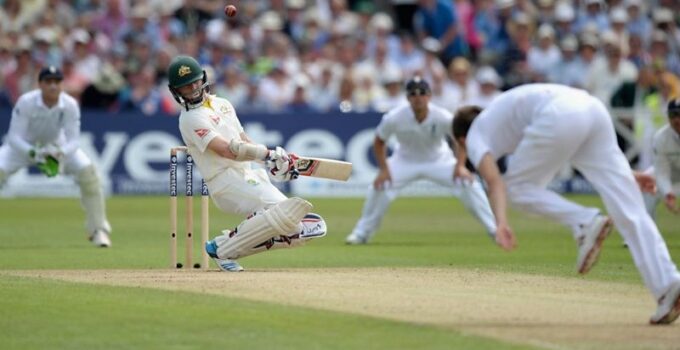
Fast bowling is a vital aspect of cricket, requiring precision, speed, and tactical acumen. As bowlers charge in, the field placements around them play a crucial role in determining the outcome of their deliveries. In this context, understanding the best field settings for fast bowlers can significantly enhance their effectiveness.
Article Summary
Optimal field settings for fast bowlers often include a combination of attacking and defensive placements, depending on the batsman’s strengths and weaknesses. We favour employing slips and gully positions for catching edges while also ensuring robust protection on the boundary to counter aggressive batting. Strategic fielding can lead to breakthroughs, leveraging the fast bowler’s pace to create pressure and induce mistakes.
Understanding Fast Bowling Dynamics
Before we dive into field settings, let’s appreciate the dynamics of fast bowling. Speedsters rely not only on their raw pace but also on swing, seam movement, and bounce. Each delivery is an opportunity to exploit a batsman’s weaknesses, making field placements critical in creating dismissals.
We must take into account the pitch conditions, the weather, and the batsman’s disposition. For instance, a moist pitch may aid swing bowling, compelling us to adjust our field settings accordingly. The strategic arrangements behind the fast bowler can increase the likelihood of catching edges, leading to crucial wickets.
Key Field Placements for Fast Bowlers
When it comes to field placements for fast bowlers, we often categorize them into two types: attacking and defensive. Each serves its purpose based on the game situation, the ability of the batsman, and the bowler’s approach.
Attacking Field Placements
An attacking field aims to create catching opportunities or pressure on the batsman. Here are some essential placements:
- Slips: Typically, we place one or more slips (generally one to four) behind the batsman to catch any edges that may occur. The number of slips may vary based on the bowler’s speed and the batsman’s tendency to play loose shots.
- Gully: Positioned close to slips but slightly behind, the gully fielder is critical for catching balls that fall short of the slips. This positioning can lead to quick wickets.
- Short Leg: For bowlers who generate bounce, having a short leg fielder can lead to catches off mis-hits or deflections from the bat.
- Point and Cover: Strategic placements here can help restrict runs while maintaining catching options, especially against an attacking batsman.
Utilising these placements can create a scenario where the batsman feels pressured, inevitably leading to mistakes and, subsequently, wickets.
Defensive Field Placements
While the attacking field is essential, defensive placements also play a crucial role, particularly in limited-overs formats where preserving runs is key.
- Deep Midwicket and Deep Square Leg: These placements are important when the fast bowler’s delivery angles toward the leg side, especially against left-handers.
- Long Off and Long On: Positioned at the boundary to guard against aerial shots, these fielders can prevent easy runs via over-the-top shots.
- Third Man: This is crucial for cutting off runs from edges that run down to the boundary, especially when seam or bounce is likely.
A balanced approach between attacking and defensive field placements can significantly impact the match’s outcome. The key is to adapt to the prevailing conditions and the batsman’s form.
Factors Influencing Field Settings
Several factors dictate how we set the field for fast bowlers. It’s paramount that we consider:
Pitch Conditions
A fast, bouncy pitch requires aggressive field settings, while a slower track may necessitate a more cautious approach. Through experience, we have learned to read the pitch and understand how it interacts with our bowlers.
Batsman’s Strengths and Weaknesses
Analyzing a batsman’s tendencies allows us to customize our field arrangements. For instance, a batsman prone to playing cross-bat shots might warrant a fine leg and square leg, whereas someone who leans towards more defensive strokes may invite more slips.
Game Situation
In a close contest, we must strike a balance between taking wickets and preventing runs. This often involves shifting fielders during crucial overs of a match, which can change the course of a game dramatically.
Making Adjustments in Real-Time
As the game progresses, we must remain vigilant and adaptable. Fast bowlers often find themselves in different scenarios; hence, the ability to make real-time adjustments to field placements is vital. Communication between bowlers and fielders is key, ensuring everyone is aware of the strategy. It’s often a blend of intuition and experience that dictates our decisions.
Conclusion
In conclusion, the best field settings for fast bowlers hinge on a blend of aggressive and defensive tactics tailored to the game context. By observing pitch conditions, analyzing the batsman’s strengths, and being flexible throughout the match, we can optimize our field settings. Ultimately, our goal is to use these strategies to create pressure and cultivate opportunities for outstanding fast-bowling performances. Adapting and fine-tuning our field placements could lead us to crucial breakthroughs, a vital element in winning matches in the enthralling game of cricket.